
Flower Mound Resident Lookup Records
A name can appear in a Flower Mound property record, a registration record, or a court case without proving the same thing. The Denton Central Appraisal District search is useful for an owner or filing name and separates mailing address from the taxable situs. The voter routes are better for a registration-status check. Courts record a party's connection to a case, while a vital index may point to an event. The useful question comes first: whether a person owned a parcel, was registered in Denton County, appeared in a case, or needs a certified record from its custodian.
| Record | What It Confirms | Where | Access |
|---|---|---|---|
| DCAD parcel | Owner or filing name, mailing and situs fields, legal description | Denton Central Appraisal District | Public search; owner data can lag and confidential fields are omitted |
| Voter registration | Registration status, precinct, and address where lawfully displayed | Texas My Voter Portal or Vote Denton | Name, county, date of birth, and ZIP route; protected addresses may be withheld |
| Court record | Party name, case number, court, dates, and case status | Local clerks and re:SearchTX | Coverage varies; sealed and other protected matters are absent |
| Vital index | A marriage, divorce, birth, or death lead | DSHS and the local custodian | Indexes and certified copies have different access rules |
| License or filing | A regulated credential or recorded business affiliation | TDLR, SOS, or County Clerk | Supporting evidence, not residence proof |
Use the record keyed to the fact already known. An address and legal description favor the appraisal and deed trail. A county, date of birth, and ZIP favor the voter route. A cause number belongs with the court that holds it. This keeps a resident lookup focused and limits an otherwise common same-name error.
Flower Mound Two-Anchor Checks
Two independent anchors should agree before a Flower Mound name is treated as a match. Strong pairs include a middle name with a matching situs or legal description, a date of birth with voter status, or a case number with the correct court. A spouse, probate relationship, stable VUID, or property ID can also help. A mailing address alone is weaker because it may belong to an agent, trust, or owner who lives elsewhere. Record the source date too. A deed records a transfer date, while a voter result reflects a registration status at the time it is checked.
- Search the person's name in DCAD and preserve the printed owner name, mailing field, situs, and property ID without merging similar names.
- When county, date of birth, and ZIP are lawfully known, use an official voter route to check whether the registration result supplies a second matching detail.
- Compare the parcel's legal description or address with the county tax or deed record before treating the property as the same Flower Mound connection.
- Use a court, vital, probate, or license record only to confirm the specific question, then ask the custodian for the underlying record when formal proof is needed.
The state My Voter Portal is the official starting point for a lawful registration check.
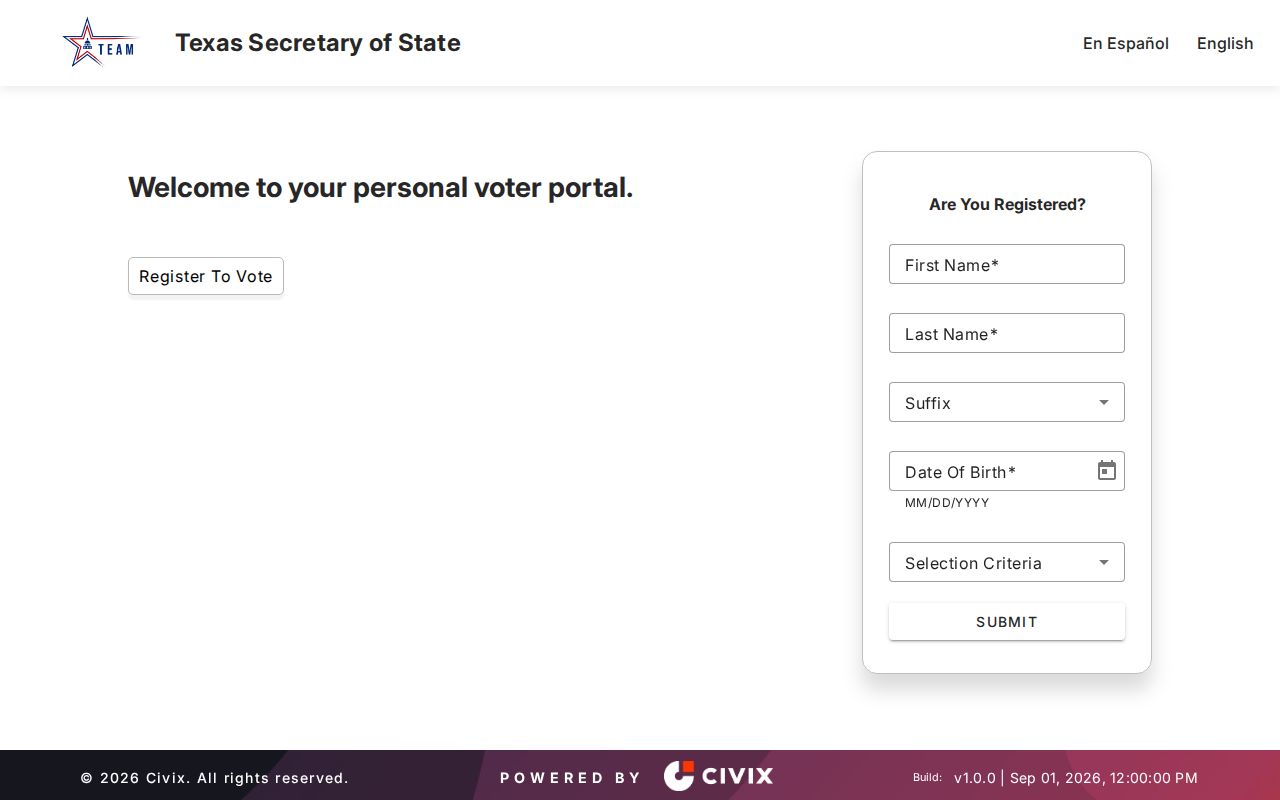
Its result can help distinguish a person through registration context, but it is not a block roster and a protected voter may not have a usable web address.
Vote Denton provides the county's voter-lookup route for the same Flower Mound resident lookup task.
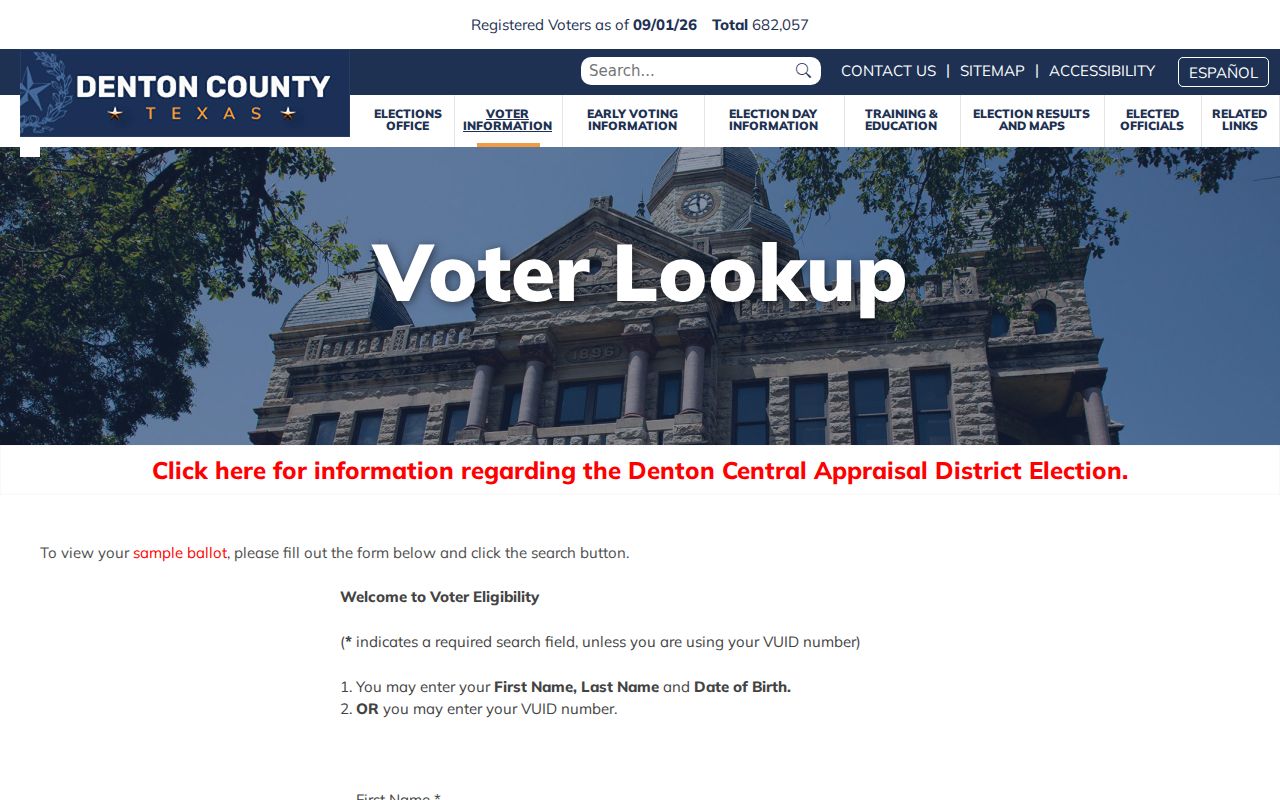
Use the county route to confirm the applicable elections office rather than assuming a Town office maintains the registration record.
Note: A public voter match can be real even when a protected address is suppressed or replaced under Texas confidentiality rules.
Flower Mound Court Record Matches
A court result needs a court-specific reading. Flower Mound Municipal Court has no documented public name-search page. Its records-request form asks for requester information, subject name and identifying details, certification and receipt choices, plus a description that can include an offense date, citation, or warrant. The Municipal Court is part of the judiciary, not an ordinary PIA desk, so release may require judge approval. County cases follow the Denton County judicial-record search; district records belong with the Denton District Clerk.
The statewide re:SearchTX layer uses an account. After sign-in, its guide describes Cases, Filings, Text in Documents, and Hearings searches, then keyword and county, court, or party filters. The system can open case details, show a register of actions, and save or export results. It is not a complete trial-court or criminal-history system, and document access may require a payment method.
| re:SearchTX choice | Useful Flower Mound check |
|---|---|
| Cases | Find a case by party and narrow with county or court filters. |
| Filings | Separate a filing event from the underlying incident date. |
| Text in Documents | Search document text where electronic material is available. |
| Hearings | Review a hearing record without treating it as a final outcome. |
The re:SearchTX court-records search shows the account-based court layer used for Flower Mound resident lookup work.
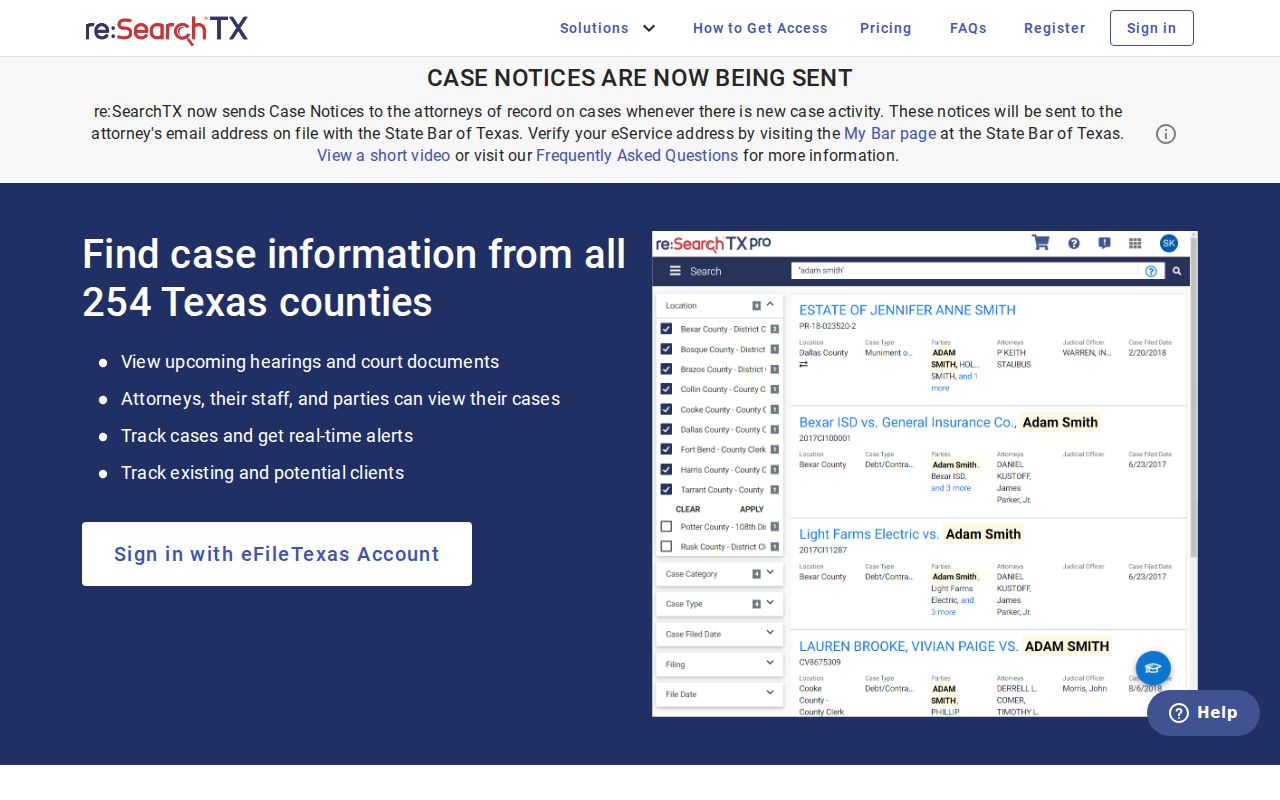
Its filters can reduce a name match, but the local clerk remains the custodian when a case record or copy is needed.
A court result can be read as a set of separate fields, not as a conclusion about one person.
- Cause number: the case identifier needed to reach the clerk or correct file.
- Court: the tribunal that holds the case, which may be municipal, county, district, or federal.
- Parties and attorneys: names appearing in the case, not proof of a current Flower Mound address.
- Filing and hearing dates: procedural dates that can differ from the date of the underlying event.
- Filing type and status: the docket event, disposition, or judgment status shown by that record.
A docket is the court's running list of case events. It does not establish a conviction, and a party name does not establish Flower Mound residence. Check initials, alternate spellings, court type, dates, and another anchor before drawing a conclusion.
Flower Mound Vital Index Leads
Texas vital material has a sharp line between an index lead and a certified record. The DSHS marriage and divorce indexes begin in 1966 and 1968. Their downloadable annual files may show both names, ages, event date and place, a file number, and the county name or code. The agency cautions that the files are not comprehensive and can contain spelling or data-entry errors. A marriage license is held by the county clerk, while a local divorce decree is held by the district clerk.
Birth records generally open after 75 years and death records after 25 years under Texas Government Code §552.115. Recent certified copies are limited to qualified applicants, and Denton County says local birth and death information cannot be verified by telephone. DSHS OVRA handles statewide online orders for eligible requesters who are at least 18. Route a Flower Mound event by where it happened, not simply by a present mailing address.
- Index
- A finding aid that points to an event or record; it is not the certified document.
- Image
- A scanned record or document page. It can add context, but availability and fees vary by custodian.
- Certified copy
- A custodian-issued copy accepted for official proof when the requester meets the record's access rules.
Note: A verification letter, a marriage license, and a divorce decree are different records even when they refer to the same event.
Verify a Flower Mound Resident
Verification should stop when the needed fact is confirmed. For a current property connection, compare the DCAD name and both address fields with the county deed index's grantee entry and legal description. For a registration question, compare the official voter result with another lawful identifier, not with a guessed address. For a court matter, use the case number and court type to reach the correct clerk. The Denton Official Records Search provides Quick and Advanced modes, date filters, and an Index Only or Index & Full Text OCR choice for the legal-record trail.
OCR can help with a newer typed document when a name search misses it. An older handwritten document or poor scan may not be found that way. Search the legal description, instrument number, or names from the record's printed index instead. If the goal shifts from one person to historical households at an address, the Flower Mound city directory collections provide a separate dated source rather than a current match.
Note: Preserve the printed spelling, source date, and record type, because normalizing a name too early can hide the reason two records differ.
Flower Mound Probate and Licenses
Probate is the right Flower Mound resident lookup route when the question is an estate, fiduciary, or heir. Denton County Clerk probate files can identify public case parties, while historic probate minutes in the Texas State Library guide run from 1876 to 1931. Access still varies by file, and sealed or confidential papers remain restricted. An obituary can add a spouse, child, executor, or last-residence lead, but the probate case and recorded document are the places to verify a legal role.
A professional or business record is a separate kind of clue. The Texas Department of Licensing and Regulation search accepts license type, number, first or last name, company, city, county, ZIP, and status. SOS filings, county assumed names, and Town permit records can show an affiliation. A registered agent, manager, permit contact, or office address is not proof that the person lives in Flower Mound. Keep that distinction visible in every resident lookup.
Flower Mound PIA Fallbacks
When an online result is missing, ask the custodian for an existing record instead of asking staff to identify a person. Texas Public Information Act requests use Texas Government Code chapter 552. The Town's Open Records Requests page identifies its Public Information Request Center, records@flowermound.gov, mail or hand delivery to the Town Secretary, and approved Town process. Resolution 12-25 updated those designated channels on June 16, 2025. A request sent to an unrelated department may be redirected.
The Municipal Court form is the proper Flower Mound route for a municipal judicial record, not the general PIA route.
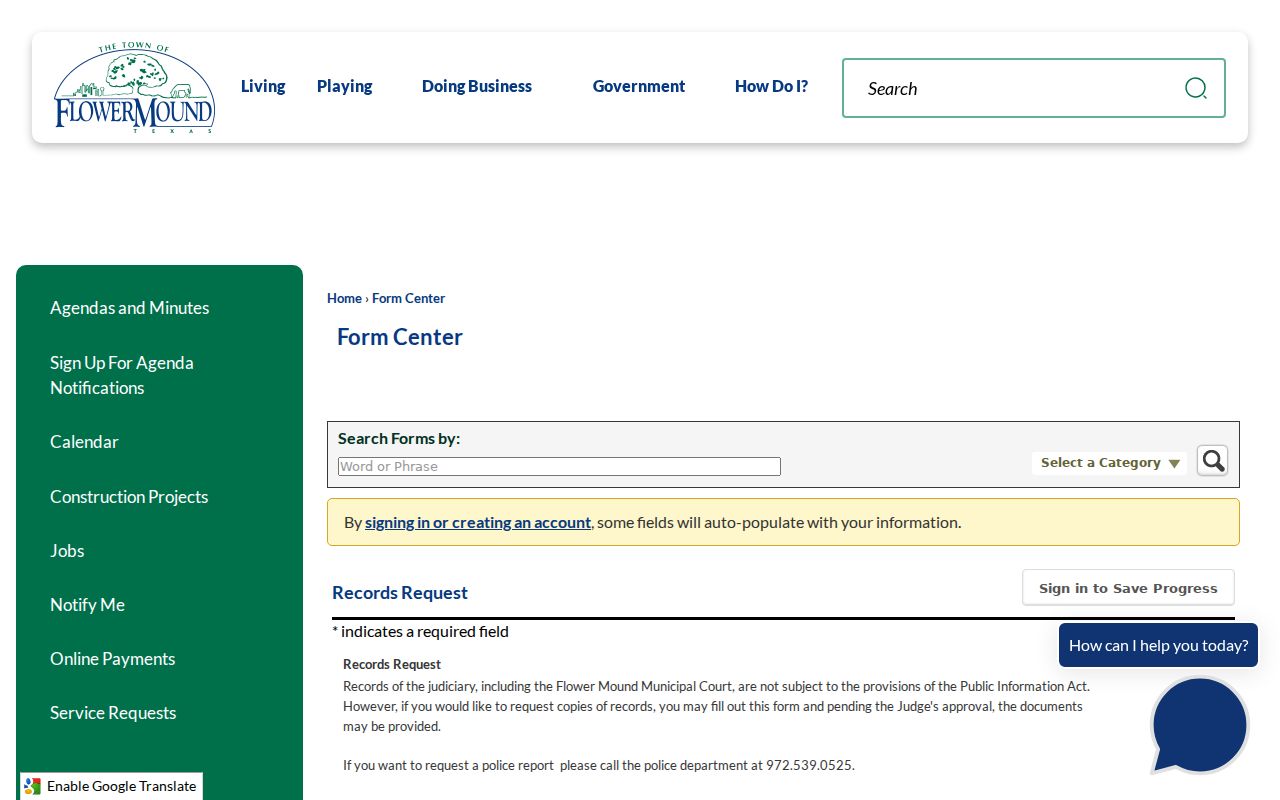
The form's certification, receipt, and description fields help identify a defined record, while the court controls whether judicial material may be released.
For district court material, the Denton District Clerk accepts a document request by email, mail, fax, or delivery and asks for identifying case details. Its felony-request guidance says results cover only records held by that office and allows up to ten business days. A PIA request can seek an existing public record, but it does not turn protected details into public information or require a new search to be created.
Flower Mound Resident Lookup Limits
Texas law leaves important gaps around a Flower Mound resident lookup. Texas Election Code §§13.004 and 18.005 protect Social Security numbers, driver's-license numbers, and DPS identifiers, while protected voters and Address Confidentiality Program participants can have an address suppressed or substituted. The Texas Address Confidentiality Program provides a substitute-address and mail-forwarding mechanism for qualified survivors. Sealed, expunged, juvenile, adoption, and confidential court material also remains outside an ordinary search.
A wrong entry should be raised with its actual custodian: DCAD for appraisal data, the County Clerk for an official-record index, county elections for voter status, the clerk or court for a docket, and DSHS or the local registrar for vital material. Denton County also publishes a redaction procedures and forms route for sensitive recorded-document fields.
Flower Mound Record History
Older Flower Mound resident lookup work has a different access pattern from a current search. Denton County deed records begin in 1854 in the Texas State Library's Denton County guide, yet the current online index does not state a historical cutoff. District-court e-filing began in 2012, and re:SearchTX became a broader electronic layer later. That split explains why a result may require a courthouse, microfilm reel, library collection, or clerk request instead of a web search.
For a former classmate or a pre-subdivision family, the Flower Mound Library genealogy collection, local newspapers, yearbooks, the Office of History and Culture, and regional phone directories can supply dated leads. Each is a discovery source. Confirm a person, date, or relationship with the underlying deed, certificate, court file, cemetery record, or other custodian record.