
Map Flower Mound Resident Records
A Flower Mound residents directory is assembled from records that answer different questions. Start with a street address when the goal is to identify the property and its recorded owner. Start with a full name when the goal is to test a particular connection. The Denton Central Appraisal District property search ties an owner or filing name to a parcel, while the County Clerk's deed index can tie that parcel to a dated transfer. A voter lookup is a status check, not a street roster. Old telephone books, newspapers, and county archives help only after the modern address trail is clear.
Ownership is not the same thing as residence. A parcel can show a different mailing address, and a household can include people absent from property records. Use the most direct record for the question, keep the date attached to each result, and compare a second custodian before deciding that two similar names identify one person.
- Search the property roll by owner name, address, or property ID, then copy the situs address and legal description.
- Use the Texas My Voter Portal or Vote Denton only to confirm a lawful registration question.
- Search the Denton Official Records Search for the grantor, grantee, instrument, or legal description.
- For an earlier household, compare regional telephone volumes, city directories, newspapers, and the library's genealogy resources.
- When no portal reaches the needed record, ask the named custodian for a copy or use the Texas Public Information Act route where it applies.
Flower Mound Resident Records Offices
Flower Mound is primarily a Denton County records search, although an edge parcel deserves a county-line check. The County Clerk holds the recorded-property, probate, county-court, and local vital trail. DCAD maintains appraisal data, and Denton County Elections keeps the registration record. The Town adds permits, code cases, and municipal-court requests. For an address-based sequence, the detailed parcel path belongs on the Flower Mound street directory.
Denton County Clerk
Recording Division
1450 E McKinney Street, Denton, TX 76209
940-349-2012
Denton Central Appraisal District
Property roll and parcel fields
Owner, mailing, situs, and legal-description data
Online record route
Check Flower Mound County Lines
Most Flower Mound records lead to Denton County, not to a county-seat office in Town. That matters for a historic parcel near the southern or western edge, where local material describes adjoining Tarrant County. Confirm the county, city limits, and legal description before ordering a document. A mailing address that says Flower Mound does not settle jurisdiction, and the Town's ZIP labels cross municipal boundaries.
The Town GIS resources help establish the local map context. County GIS adds parcel, boundary, precinct, road, floodplain, and district layers. A property trail becomes much more reliable when its parcel shape, R number or property ID, and lot or block agree with the deed record.
Use Flower Mound Parcel Clues
The first useful record is often the parcel card, not a person-name list. DCAD's documented search modes are owner name, address, and property ID or R number. Its schema describes owner or filing name, mailing address, situs address, legal description, lot or tract, subdivision, exemption, improvement, value, and map-related fields. Geometry and downloads are updated weekly, but owner data can lag during the annual notice and protest cycle. Treat the card as a dated appraisal snapshot.
Denton County's property-search portal is a separate county route. The recorded transfer trail then moves to the Clerk, where a legal description can distinguish properties with a similar street label. The photographed property-search screen below is a useful reminder to read the portal's current labels before entering a query.
Denton County property search is shown in this official portal capture.
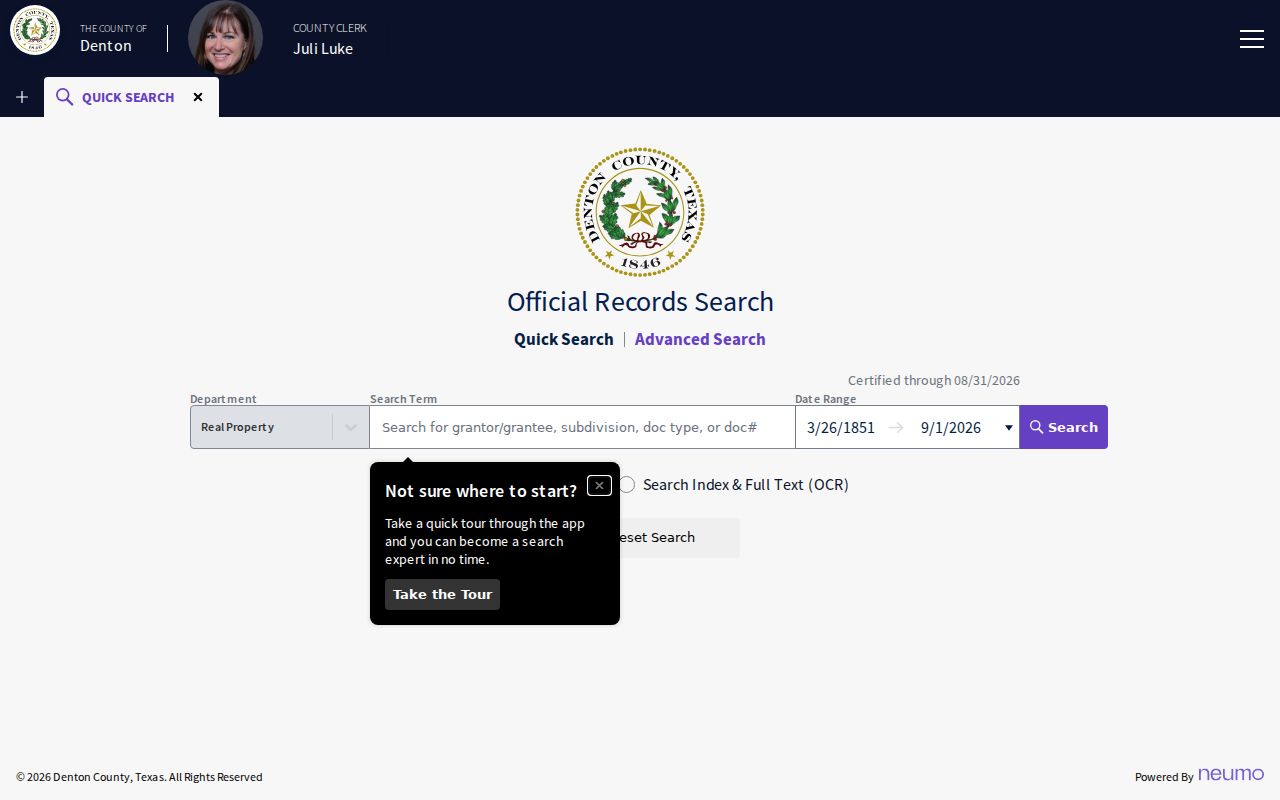
Use a recorded legal description or property ID to carry the result into a deed or plat search, especially when the owner receives mail elsewhere.
- Parcel
- A mapped unit of property identified by an appraisal district or county property ID.
- Situs address
- The physical taxable location of the property, which can differ from its mailing address.
- Index
- A finding tool that points to a record. It is not automatically the full document image.
- Criss-cross directory
- A historical directory arranged from address to occupant rather than from name to address.
Read Flower Mound Property Fields
Search labels differ by custodian. The County Tax portal separates account number, owner name, owner mailing address, and property location. It also offers account type, active or inactive selection, and paid, unpaid, or both status. DCAD exposes the appraisal side of the parcel. The Town's eTRAKiT portal adds parcel, house-number, and street-name searching for municipal work. None creates a complete list of everyone in a household.
| Portal field | Input | Why it matters | Result limit |
|---|---|---|---|
| DCAD search | Owner, address, or property ID | Find a parcel card and legal description | Exact current form choices were not captured |
| County tax search | Account, owner, mailing address, or property location | Separates mail destination from taxable situs | No coverage date displayed |
| eTRAKiT | Parcel, house number, or street name | Find municipal parcel and permit tabs | Not a household roll |
Note: A homestead exemption can support an owner-occupancy inference, but it does not prove who is physically present today.
Confirm Flower Mound Voter Status
Texas voter records have a narrow but useful role in a residents directory search. The state tool asks for identifying details such as name, county, date of birth, and ZIP to return registration status and polling information. Texas Election Code §18.005 makes name, date of birth, VUID, and election participation records public subject to confidentiality rules. It does not turn the web tool into a public street-by-street roster, and it does not disclose ballot choices.
Denton County Elections is the offline custodian when a lawful current lookup, public list, historic poll book, or precinct statistic needs a request. The full-file request mechanics, fee, format, and delivery schedule were not located in the reviewed official material, so confirm them with the Elections Administrator rather than assuming an online display can be exported.
Denton County Elections information identifies the county route behind a Flower Mound voter question.
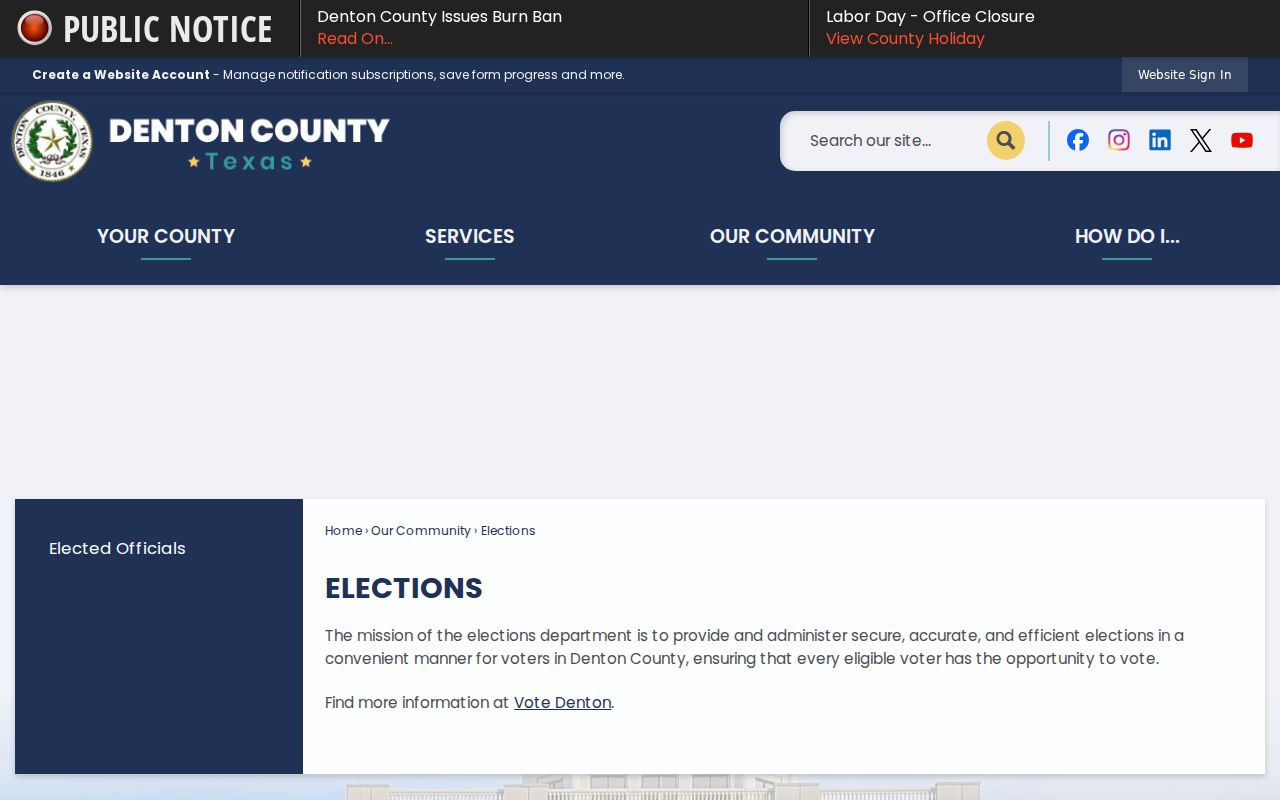
A registration result should be compared with an independent record and the result date, because moves, notices, cancellations, and protected-address rules can change what the public display shows.
Flower Mound Current Resident Directories
No one official record lists every Flower Mound resident. Instead, each current source documents a limited relationship: ownership, a recorded document, registration status, a case role, or a public community contact. The strongest answer comes from selecting the source that matches the question and respecting its limits. For a single name that needs careful confirmation, the separate Flower Mound resident lookup uses a two-anchor approach.
| Flower Mound source | Relationship shown | Custodian | Access route |
|---|---|---|---|
| DCAD parcel record | Owner or filing party, mailing and situs information | DCAD | Public property search |
| County tax account | Owner, property location, and account status | Denton County Tax Office | Online tax search |
| Recorded-instrument index | Grantors, grantees, and document history | Denton County Clerk | Quick, Advanced, and OCR modes |
| Voter registration route | Registration status and polling details | Denton County Elections / Texas SOS | Individual lookup and office request channels |
| HOA contact directory | Community and manager contacts | Town of Flower Mound | Public contacts, not member rosters |
Search Flower Mound Deed Records
The County Clerk's official-records interface has Quick and Advanced modes. Its visible Quick Search accepts a search term, recorded-date range, quick date buttons, and a choice between Index Only and Index & Full Text OCR. The search prompt supports a grantor or grantee, subdivision, document type, or document number. Multi-word behavior differs by mode, so an OCR search can help with a modern document while a handwritten or poor scan may require a name or legal-description search.
The result trail is practical: find the current owner or legal description, search for a deed where that owner is the grantee, record the seller and instrument number, then search the seller as the next grantee. Confirm lot, block, subdivision, acreage, or another legal detail at every step. The Texas State Library's Denton guide documents deeds from 1854, but the current online portal does not state its start or cutoff date.
Denton County Clerk records office provides the custodian context for the official record trail.
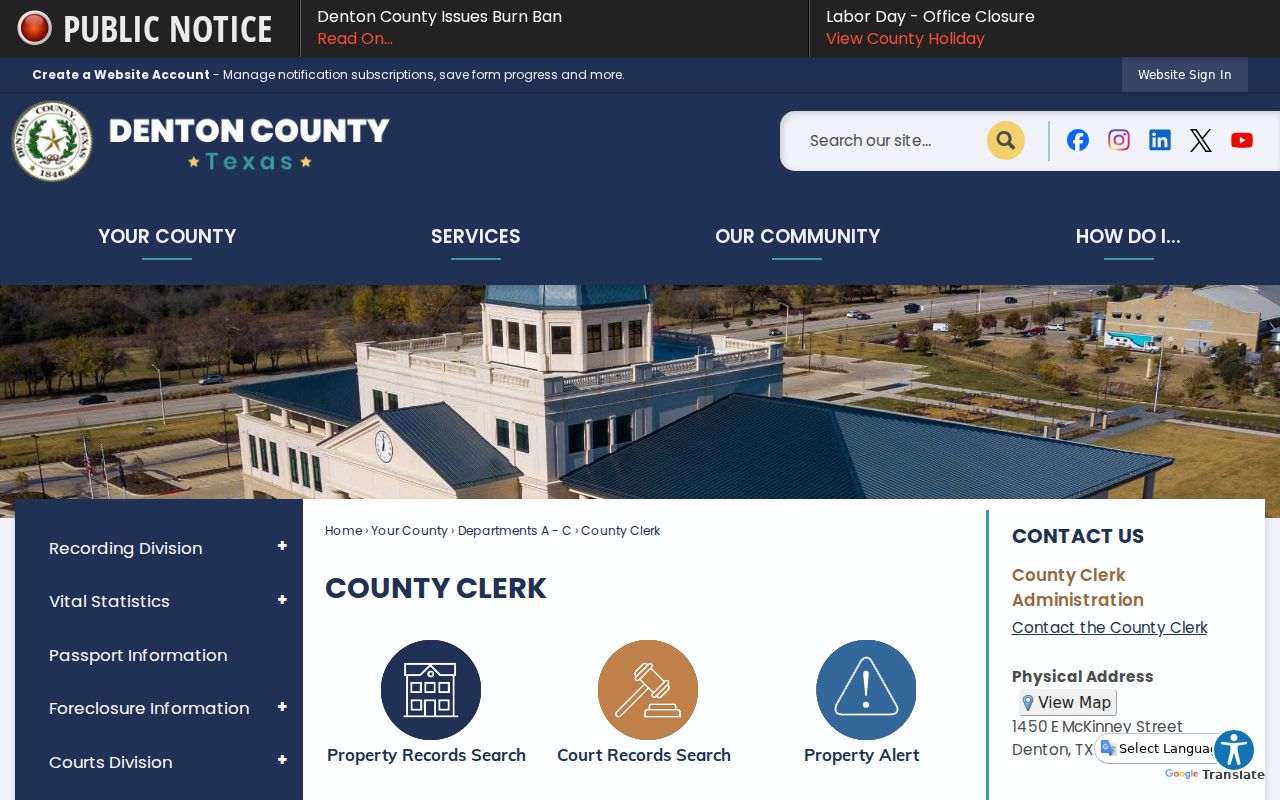
When an index points to a record rather than a usable image, give the Clerk the instrument number, volume and page, grantor-grantee pair, or legal description in a copy request.
Denton County Recording Division describes the real-property custodian that accepts and maintains recorded instruments.
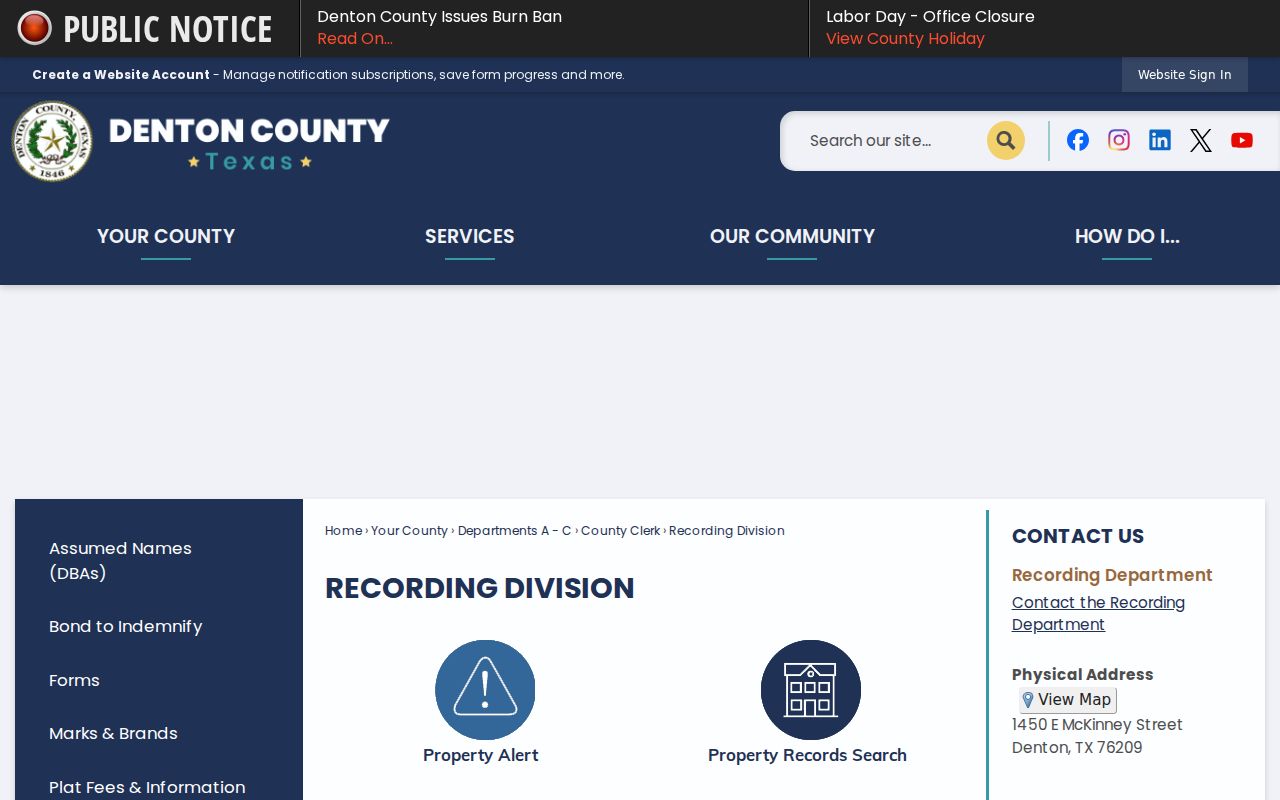
The division's documented counter hours are Monday through Friday, 8:00 a.m. to 4:30 p.m., which is an important alternative when the online search reaches a record that needs staff retrieval.
Use Flower Mound Court Channels
Court records require a custodian-by-custodian check. Flower Mound Municipal Court has no public name-search URL in the reviewed sources. Its records-request form asks for requester and subject details, certification choice, receipt method, description, and helpful identifiers such as an offense date, citation, or warrant. The Town notes that the judiciary is not subject to the ordinary PIA process in the same manner, and release may depend on judge approval.
County court records, District Clerk records, re:SearchTX, and PACER each cover different ground. re:SearchTX permits account-based Cases, Filings, Text in Documents, and Hearings searches, with county, court, party, and keyword filtering. It is an electronic layer, not a complete criminal-history system. A docket lists events in a case; it is not proof that a named party is a current resident or that a case had a particular outcome.
Order Flower Mound Vital Records Carefully
Vital indexes and certified copies serve different needs. Denton County Clerk can issue qualifying local birth, death, and marriage records, while Denton District Clerk holds local divorce decrees. Texas DSHS supplies statewide certificates, verifications, and the marriage and divorce index routes. A marriage index begins in 1966 and a divorce index in 1968, but an index result is only a lead. A certified marriage license comes from the county clerk, and a divorce decree comes from the district clerk.
Recent birth and death certificates are restricted. Texas Government Code §552.115 generally opens birth records after 75 years and death records after 25 years. DSHS lists qualified applicants and its OVRA ordering route for eligible Texas events. Start with the event location, not a person's later mailing address, and confirm the form, fee, ID, and processing instructions before ordering.
Trace Flower Mound Historical Directories
Flower Mound incorporated in 1961, and official sources did not identify a standalone Polk-style city-directory run for the Town. The best historical trail is regional. Digitized Greater Dallas White Pages examples from 1985 and 1986 can offer surname, telephone, and address leads. A Greater Dallas Yellow Pages volume from December 2000 has 1,510 pages and business-address context. Denton city directories are documented as sporadic from 1920 through 1991, with Denton Public Library holdings stronger from the 1940s.
The Flower Mound Public Library's genealogy resources include in-library Ancestry Library Edition, Fold3, HeritageQuest, historical Texas newspapers, and Digital Sanborn Maps. The Denton Record-Chronicle is on microfilm from 1909 through 2018, with a digital gap around 1981 to 2002. The fuller historical shelf is organized in the Flower Mound city directory collection guide.
Texas State Library's Denton County records guide identifies the microfilm and county-book trail behind older Flower Mound research.

Its documented gaps and unfilmed volumes are a reason to record the reel, volume, and page, rather than treating one failed online search as proof that a household never appeared.
Read Flower Mound Record History
Local history can explain why the residents directory has several layers. Denton County tax rolls begin in 1846 in the State Library guide, deed books in 1854, and marriage volumes in 1875. The Town came much later. A family may appear first through a rural route, legal description, church reference, tax roll, or Denton newspaper before a modern Flower Mound address exists. The Town history identifies incorporation in 1961 and a first library in 1985.
The Town of Flower Mound history supplies local date anchors for interpreting an older address or family story.
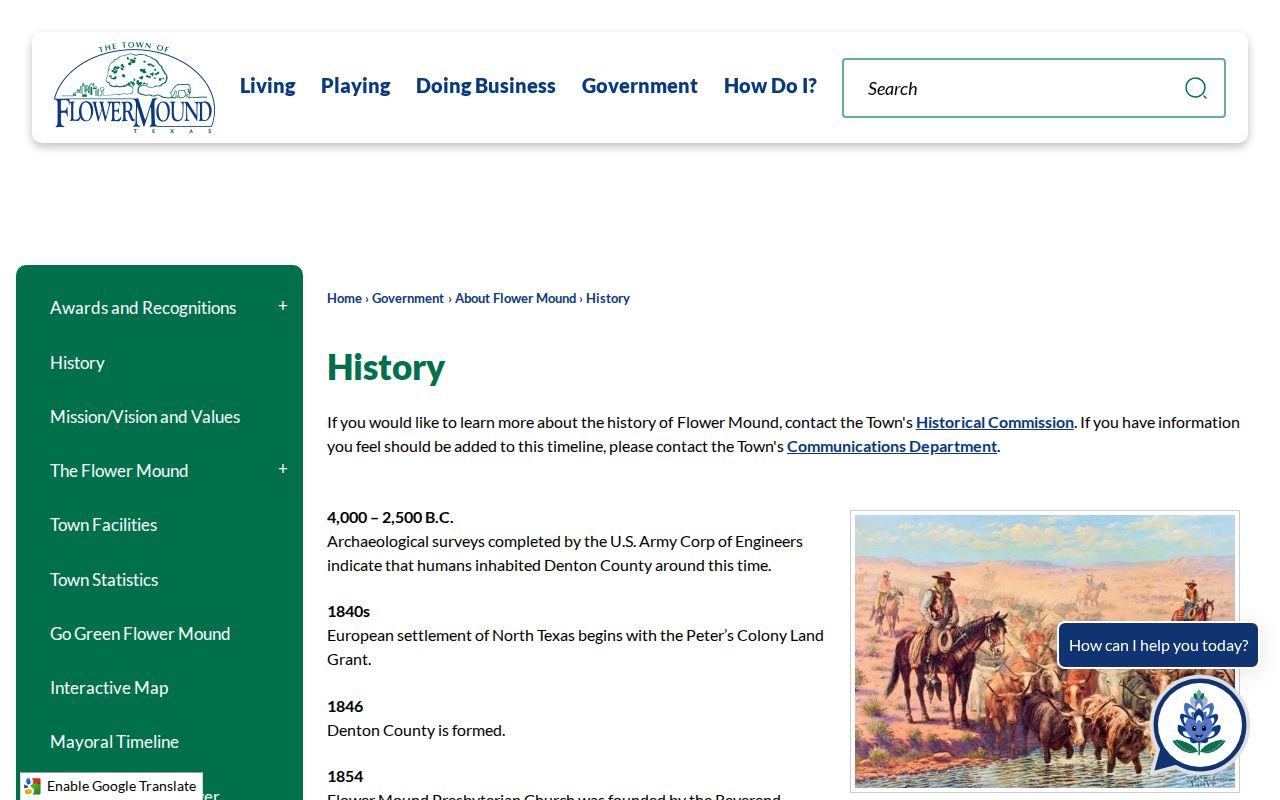
A dated source should retain its printed city, ZIP, and address instead of being silently converted to a modern label.
Follow Flower Mound House Clues
The Gibson-Grant Log House gives Flower Mound a concrete house-history lesson. Research summarized by the Town dates its logs to about 1857 to 1860 and its construction to about 1860 to 1861. The structure was discovered within later walls, then studied with Denton County Office of History and Culture and University of Arkansas involvement. That story does not prove anything about another parcel, but it shows why a present-day exterior or street label cannot substitute for deeds, plats, maps, and archival sources.
The Gibson-Grant Historic Log House record trail is a Town source for this local-history example.
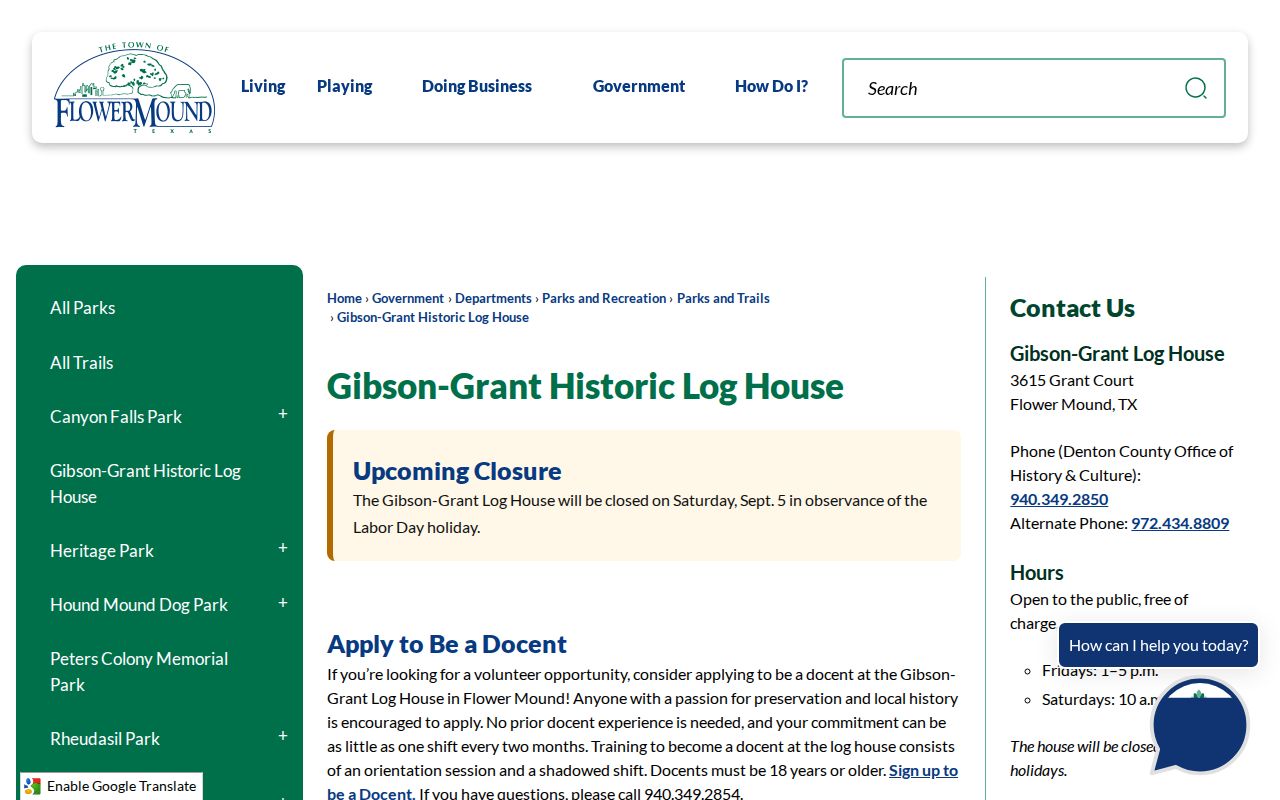
For a particular address, follow the current parcel and legal description backward before relying on an appealing historic association.
Keep Flower Mound Records Private
Texas access is not all-or-nothing. The Texas Address Confidentiality Program can provide a substitute address for qualifying survivors. Election Code §§13.004 and 18.005 protect identifiers and provide special treatment for protected voter addresses. Juvenile, sealed, expunged, and protected court material is not made public by a name search. The DPPA restricts nonconsensual use of motor-vehicle information. A legitimate result can therefore omit an address by design.
For a wrong or sensitive recorded item, use the custodian's correction, redaction, sealing, or expunction procedure. Denton County publishes a records-forms route for redaction requests. A request should identify the instrument or document and the field at issue. Do not try to reconstruct or republish a suppressed address from another source.
Request Flower Mound Public Records
The Texas Public Information Act, Texas Government Code chapter 552, generally gives any person access to public information, subject to exceptions and confidentiality laws. The right is to an existing record, not to an unlimited biographical search by staff. Identify the correct custodian, the record type, the time range, and a locating detail such as an instrument number, cause number, parcel ID, or address. Courts and vital records have their own rules even when other Town material is requested under the PIA.
Flower Mound's Open Records Requests page states that Resolution 12-25 updated designated request methods on June 16, 2025. The approved routes include the Public Information Request Center, records@flowermound.gov, and delivery to the Town Secretary. The request belongs with the Town only when the Town holds the record.
Texas Public Information Act guidance explains the statewide access framework.
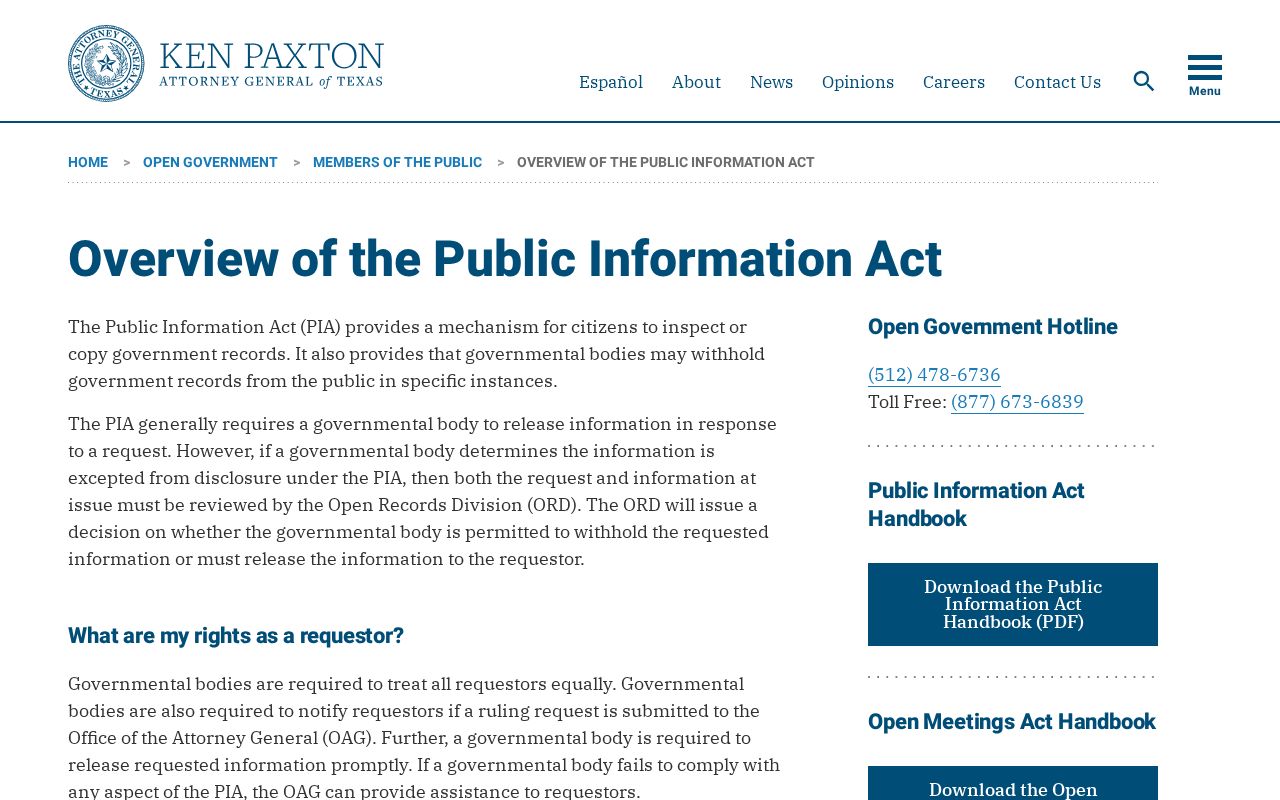
Use a written, narrow request and preserve the response date. A custodian can explain its copy route, while an official record remains the right place to verify a result.