
Flower Mound Previous Residents by Record Era
Previous residents are best traced as an address timeline. The County Clerk's deed records establish legal transfers. Directories and telephone books offer date-specific address clues. Newspapers and public probate files can connect a person to a later family event. Flower Mound's municipal permit system is useful for a current or active record, but no official historic starting date was located for that interface. Its availability should not be mistaken for a complete historic archive.
| Source | Years | Where | What It Shows |
|---|---|---|---|
| County deed records and microfilm | 1854 onward; online cutoff not stated | Denton County Clerk; Texas State Library and UNT reel guide | Transfers, legal descriptions, liens, and plats |
| Denton city directories | Sporadic 1920 to 1991; stronger from the 1940s | Denton Public Library and OHC | Name, address, business or occupation, and possible street section |
| Historical telephone books | Holdings extend toward the 1920s | OHC Research Room | Address, name, and telephone clues; unlisted people are absent |
| OHC tax cards | Denton 1948 | Denton County Office of History and Culture | Approximate build year, improvements, value, owner, and often a thumbnail image |
| Denton Record-Chronicle | Microfilm 1909 to 2018 | Emily Fowler, Portal, and DPL access | Obituaries, notices, property events, and community references |
| Federal census | Public individual schedules through 1950 | Census and genealogy access | Household composition, age, relationship, and occupation |
| Town permits and eTRAKiT | Current or active system; historic start not stated | Flower Mound Building Inspections | Permit, inspection, applicant, owner, contractor, or certificate clues |
The era determines the first source. Start with an instrument and legal description for a transfer question. Start with a dated directory or telephone book for an occupant question. Use the census only within its public release period, and keep rural-route or boundary differences in the notes.
Flower Mound Previous Residents: Start With Parcel
Use Denton Central Appraisal District property search to establish the current parcel record. Official city and district guidance supports owner name, address, and property ID or R number searches. Copy the R number, situs address, mailing address, subdivision or phase, lot and block, legal description, year-built field, improvement description, and property-value year. The mailing address and the taxable situs are different fields. Neither alone proves who occupies the location.
The DCAD record supplies the join keys that survive a shifting street label. Preserve the field text rather than silently normalizing it. A person can appear under an individual name on a deed, a shortened owner name in a municipal record, an entity name in a tax account, or a different mailing address. The parcel ID and legal description make those comparisons more reliable than a surname alone.
The Denton County Tax Assessor-Collector is a separate access route from DCAD.
The tax route distinguishes owner mailing address and property location, which helps prevent an address-history note from joining unlike fields.
Flower Mound Previous Residents: 1854 Deed Reels
The official online-records interface has Quick and Advanced Search, recorded-date filters, Index Only, and Index & Full Text OCR modes. It does not state an online beginning or cutoff date. The visible “Certified through 09/02/2021 Department” notice should not be read as an index cutoff without clarification. The Texas State Library Denton County guide, however, documents deed records beginning in 1854 and direct and reverse indexes on microfilm.
When an older item is not returned online, move to the County Clerk and the Texas State Library or UNT reel guidance. The guide notes missing or unfilmed volumes. An online no-result is therefore not proof that a deed never existed. For a subdivision parcel, search the recorded plat and addition or phase as well as the address. A plat can hold the lot and block connection that a modern street form hides.
Note: Keep the recorder's online result, volume or instrument reference, and the microfilm citation as separate entries in the address timeline.
Flower Mound Previous Residents Deed Chain
A chain of title is a sequence of instruments for the same parcel. Begin with the current owner in DCAD and locate that person's acquisition as a grantee in the Denton County Official Records Search. Confirm the lot, block, subdivision, acreage, or legal description in the official record before moving backward. The same person may own more than one parcel, so a name match without the parcel description is not enough.
- Copy the current parcel's R number, full situs, and legal description from DCAD.
- Search the current owner as grantee in the County Clerk index and open the instrument image when it is available.
- Record the prior seller as grantor, the instrument number, type, recording date, and matching legal description.
- Search that grantor as an earlier grantee, then repeat the legal-description check at every transfer.
- Inspect the first page, signature or acknowledgment, attached legal-description exhibit, and prior-instrument references when an image exists.
- Move to clerk or microfilm sources when the online trail ends, a volume is missing, or the description changes.
- Grantor
- The person or entity transferring an interest in an instrument.
- Grantee
- The person or entity receiving that interest. In a purchase deed, this is the buyer.
- Chain of title
- The documented succession of land interests traced through instruments for the same parcel.
- Legal description
- The recorded parcel description, such as subdivision, lot, block, acreage, or other land description, which is more stable than an address.
The Denton County real-property recording fee schedule is the official fee reference when a copy or recording service is needed.
Use the current county schedule rather than an old family note when deciding how to request a record or copy.
Flower Mound Previous Resident Address Continuity
No verified Flower Mound-wide street-renumbering or renaming project was found in the official sources reviewed. The documented hazards are different: postal ZIP realignment, rural-to-subdivision development, annexation or jurisdiction changes, and multi-town developments such as Canyon Falls. A printed address in an old source can therefore look different without identifying a different parcel.
Keep four forms in the timeline: the address and ZIP as printed, the current standardized situs, the R number or property ID, and the legal description. Add a dated subdivision plat or Town street-listing record when the connection is uncertain. Do not invent a street change. Mark it as unresolved until a dated plat, Town record, or County Clerk confirmation bridges the forms.
The Town GIS resources and Denton County GIS can show parcel relationships, city limits, streets, and other map layers, but their boundaries are informational and not a survey. Use the recorded plat for a legal boundary question.
Flower Mound Previous Residents in 1948 Tax Cards
The OHC's 1948 Denton tax cards can provide a compact bridge between a parcel and a dated ownership story. The cards may include an approximate construction year, improvements, value, ownership, and often a small photograph. They are particularly useful when a current Flower Mound-area parcel was formerly rural or when a modern appraisal record does not explain an older structure.
The Denton County Research Room holds local-history volumes, oral histories, special collections, and the continuing cemetery and burial record. Special collections are non-circulating, and appointments are recommended. Its on-site holdings also supply county context that a current digital parcel display cannot provide.
The Research Room is the documented backstop for tax cards, local history, and archival material that has no public name index.
The Denton Public Library's house and property research guide follows the same local sequence: current owner and legal description, Landmark Map or R number, deeds and mechanics liens, directories and phone books, newspapers, tax cards, and historic permit cards through Special Collections.
Flower Mound Past Residents in Directories and Census
Deeds identify transfers, not every household. To find who lived here before, pair the deed chain with historical telephone books, regional Greater Dallas volumes, Denton directories, and census schedules. Denton directories are sporadic from 1920 through 1991, with better Denton Public Library coverage from the 1940s. OHC telephone-book holdings may reach toward the 1920s. No standalone Flower Mound directory run is documented, so a nearby or regional volume may be the correct source.
The city-directory collections themselves are described in the Flower Mound city directory record path. Use the public federal census through 1950 to test a directory clue. Rural routes and historic boundaries may not align with the current address, so compare the enumerated place, household, and date rather than forcing a modern municipal label onto the schedule.
- Choose the directory or telephone-book year closest to the deed transfer or tax-card date.
- Copy the printed address, ZIP or rural-route form, every listed name, phone, title, date, and page.
- Check the prior and next available directory years for moves, spelling variants, or a changed listing.
- Search the same address in a reverse or criss-cross section when one exists.
- Match the dated address and names to the nearest public census year, then retain any boundary uncertainty.
- Use an obituary, cemetery record, or public probate file only to close a documented family transition.
Lawful use. Flower Mound address-history research is for family history, estate questions, and personal property curiosity. Do not use public records to stalk, harass, or harm a living person.
Flower Mound Previous Residents and Newspaper Gaps
Denton Record-Chronicle microfilm runs from 1909 through 2018. Digitized material covers early papers and the Record-Chronicle to about 1980, but there is a 1981 to 2002 gap in digitization. For a prior household active in that period, use microfilm and library access as the bridge. An online search alone leaves a meaningful hole in the timeline.
The Portal to Texas History Flower Mound partner collection contains 251 items, chiefly Cross Timbers Gazette, Double Oak Gazette, and Denton County material from the 1980s through the 2010s.
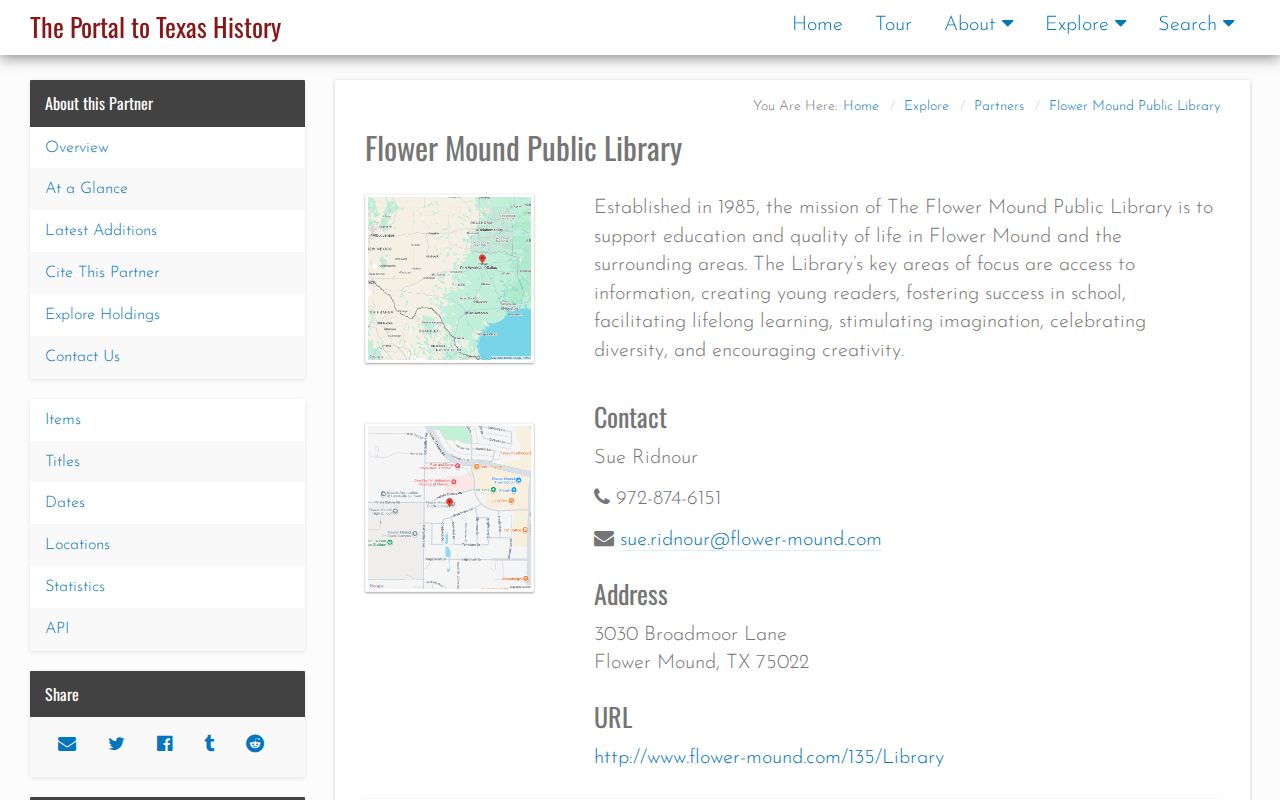
Portal material can give a useful date, organization, or neighborhood lead, while microfilm covers the documented digital gap.
Search a name with an address, subdivision, church, school, or civic term. An obituary can supply spouse, children, funeral home, last residence, or date. Treat it as a contemporary notice or family-submitted account, then verify a property transfer or succession issue with the recorded deed, certificate, or public probate file.
Flower Mound Previous Residents Through Probate
After a death, a property trail may lead to public probate material. The Denton County Clerk keeps probate records alongside real property, vital statistics, civil, misdemeanor, and juvenile court records. Search the person and any known case number through the county's judicial-record route or use the Clerk's request channel. A public filing can identify an executor, heir, spouse, or estate connection, but restricted or sealed material remains unavailable.
The Denton County records forms page is a route to official request paperwork when an identified record needs to be requested from its custodian.
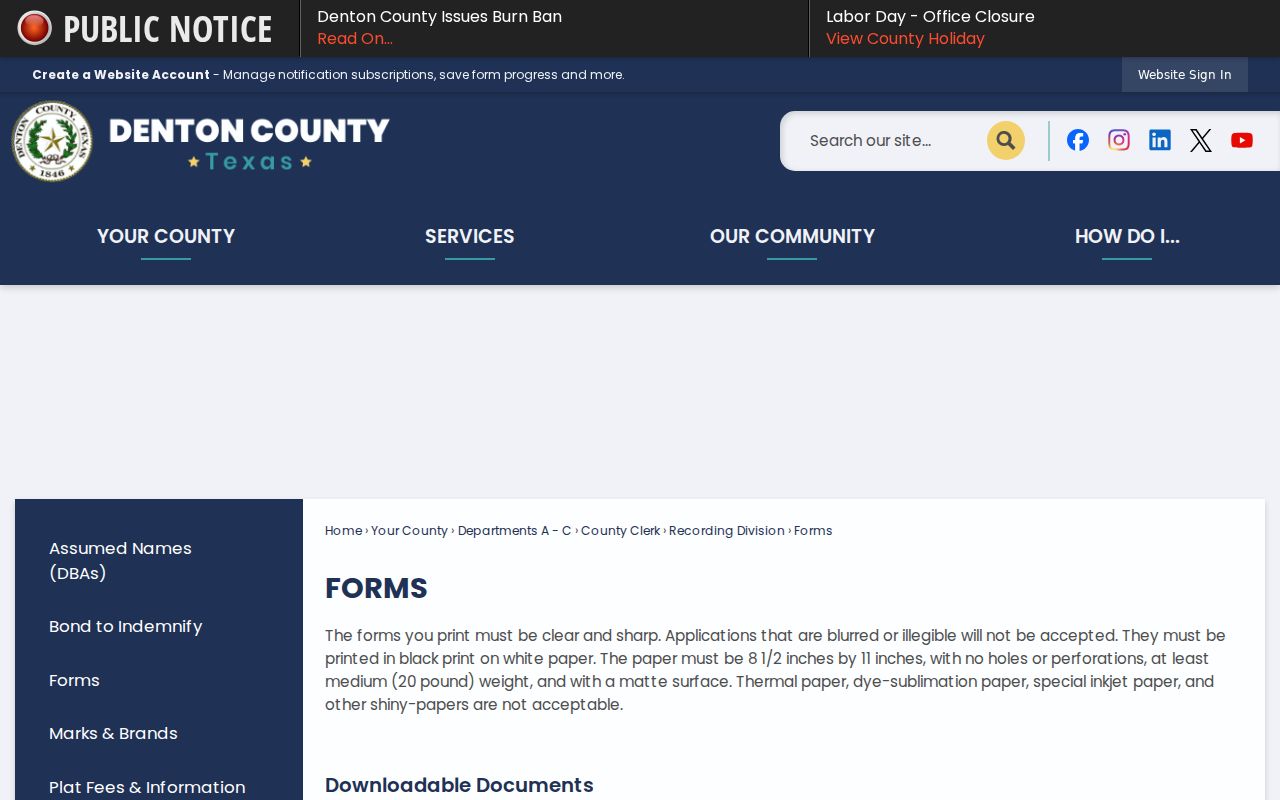
A focused request with a case number, instrument number, date range, or legal description is more useful than asking staff to reconstruct an entire address history.
Obituary to probate is an endpoint check, not a shortcut. The obituary may identify a death and last residence; the public case record may identify an estate role. Keep only the facts needed to connect the dated household and respect protected information.
Flower Mound History for Older Parcels
Gibson-Grant Log House shows why an address timeline can be older than its visible exterior. Its logs were cut around 1857 to 1860, the structure was built around 1860 to 1861, and it was discovered inside later walls. The Town, Denton OHC, and the University of Arkansas studied and restored it; the site opened to visitors in 2021 and received a 2025 historical-marker event. That is a documented local example of a long physical record trail.
Use local history as a search anchor, not a substitute for parcel proof. Flower Mound Presbyterian Church, Donald Academy, the Chisholm Trail, and old rural routes can sharpen a newspaper or oral-history search. The legal description, recorded instrument, and dated directory remain the stronger links when connecting a prior resident to a specific property.
Note: A historical landmark can explain the era of a parcel without identifying the people who occupied a nearby address.