
Flower Mound City Directory Collections by Era
Flower Mound incorporated in 1961, and official-source research did not locate a long, standalone Flower Mound city-directory series. That absence matters. The practical collection is a shelf of regional Greater Dallas telephone books, Denton directories, county history-room material, newspapers, and older land records. A Flower Mound address can appear under a regional title, a rural route, or another nearby place label. Search the printed geography of each volume before treating a missing name as a negative result.
| Collection | Years | Where Held | Access |
|---|---|---|---|
| Greater Dallas White Pages | 1985 and 1986 digitized examples | Portal to Texas History, contributed by Dallas Public Library | Free digitized pages |
| Greater Dallas Yellow Pages | December 2000, metadata covers 2000 to 2001 | Portal to Texas History | Free digitized volume |
| Denton city directories | Sporadic 1920 to 1991; stronger from the 1940s | Denton Public Library and Denton County OHC Research Room | On-site collections |
| Historical telephone books | Holdings extend toward the 1920s | OHC Research Room and local library holdings | On-site research |
| Denton Record-Chronicle | Microfilm 1909 to 2018 | Emily Fowler, Portal to Texas History, and DPL access | Microfilm and mixed digital access |
The table describes evidence trails, not a complete list of every household. Older phone subscribers could be unlisted, and a Flower Mound family might be absent from a Denton title even when it appears in a Greater Dallas volume. Start with the collection closest to the date, preserve the spelling and address exactly as printed, and record the title, issue date, and page.
Why Flower Mound City Directory Searches Are Regional
The regional approach reflects Flower Mound's record history. Early county books predate the town, while the area later grew through subdivisions, nearby cities, changing postal labels, and regional telephone service. The Texas State Library Denton County guide documents deed records from 1854, tax rolls from 1846 to 1910, and other county material that can identify an earlier rural parcel. Printed directories add a later name-and-address snapshot rather than replacing that county trail.
A directory title is not a promise of municipal coverage. The 1985 and 1986 Greater Dallas White Pages examples include Flower Mound-area entries despite their wider title. The December 2000 Yellow Pages gives business-address and telephone context, but it is not a household roll. Keep a separate note for the volume's coverage, whether the listing is residential or business-related, and the address type. That practice avoids turning a regional listing into a claim the source does not make.
Note: Preserve an older postal label as printed because a later ZIP standardization can conceal a valid historical search path.
Flower Mound City Directory Library Resources
The Flower Mound Public Library is the local starting point for library access, while its genealogy resources identify the databases that expand a directory lead. The named resources include Ancestry Library Edition, Fold3, HeritageQuest, ProQuest historical Texas newspapers, Digital Sanborn Maps, Texas State Library and Archives resources, and FamilySearch. Ancestry Library Edition is an in-library product. Database access rules can change, so check before relying on a remote session.
The Flower Mound Public Library page shows the library access point behind Flower Mound city directory research.
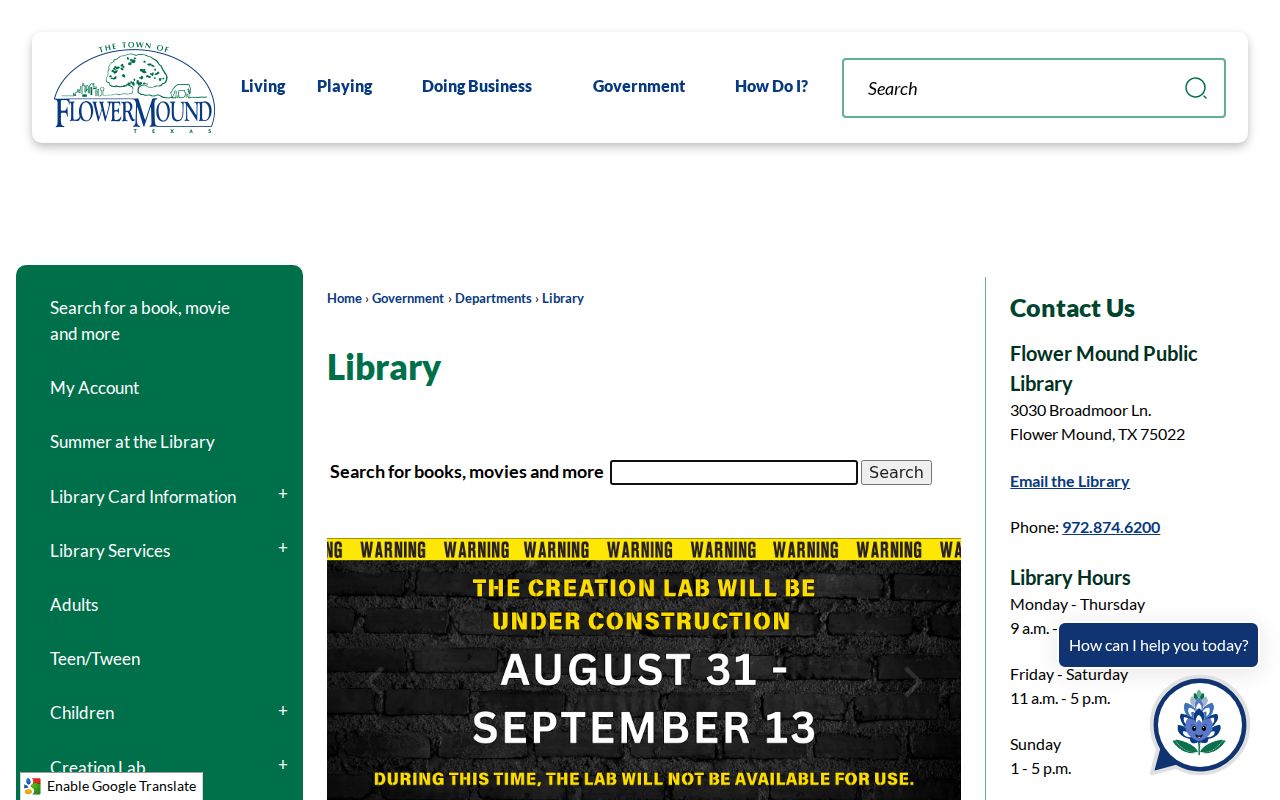
Library staff and the genealogy resource list provide the bridge from a printed name to census, newspaper, and map research.
The Flower Mound genealogy collections identify the database layer available for a city-directory lead.

A directory entry becomes more useful when its address and surname are checked against the library's newspapers, maps, and genealogy sources.
Denton City Directories for Flower Mound Names
Denton city directories run sporadically from 1920 through 1991 in the Office of History and Culture guide, with Denton Public Library holdings described as fairly complete from the 1940s and limited before then. They support both name and street-address approaches. One Lewisville directory is also noted. For a Flower Mound search, use these volumes as nearby regional context, not as proof that every Flower Mound address should be indexed there.
The Denton County Office of History and Culture Research Room is non-circulating and keeps local-history volumes, oral histories, special collections, and a continuing cemetery and burial record. It is open Monday through Friday from 9 to 4 and Saturday from 11:30 to 2:30. Appointments are recommended for special collections. Those channels matter when a digitized title does not include the needed year.
Historical telephone books can sometimes reach farther back than local city-directory holdings. Their reverse or address arrangement is especially helpful once a house number is known. A missing phone listing can mean an unlisted number, a non-subscriber, a recent subdivision, or an edition boundary. It does not establish that a property was empty.
Greater Dallas City Directory Snapshots
The 1985 Greater Dallas White Pages is a digitized regional example with Flower Mound entries. A white-pages listing can supply a surname, given name or initial, telephone number, and address. Treat it as a date-specific directory clue. It should be compared with an adjacent year and with a county record before assigning ownership or household membership.
The regional title is the point: a Flower Mound search can be successful even when the cover does not name the town alone.
The December 2000 Greater Dallas Yellow Pages has 1,510 pages and metadata for 2000 to 2001. It offers business and address context, not a personal household census. Use it to confirm a business name, service address, or local telephone context, then keep that evidence separate from residential listings.
The yellow-pages volume can clarify local address context, but it cannot establish who occupied a nearby residence.
Flower Mound City Directory Newspaper Gap
Newspapers are the strongest companion when directories skip years. Denton Record-Chronicle microfilm runs from 1909 through 2018. Portal digitization covers early papers and the Record-Chronicle to about 1980, leaving an important 1981 to 2002 digital gap. The bridge is microfilm at Emily Fowler and library access, not an assumption that an online search is complete. Search an address, surname variants, subdivision, school, or church along with the date range.
Portal to Texas History's Flower Mound partner collection has 251 items, chiefly Cross Timbers Gazette, Double Oak Gazette, and Denton County material from the 1980s through the 2010s. Denton Doings is another useful run: all issues from 1949 to 1972 are digitized. It carries society, event, and business mentions that can help place a name in a community at a given time.
Use an obituary or wedding notice as a lead, not as a substitute for a deed or vital record. A notice may supply a spouse, parents, church, funeral home, last residence, or a date for a focused follow-up search. The strongest trail preserves the original clipping citation and checks its claims against the custodian record.
Reading a Flower Mound City Directory Entry
Transcribe an old entry exactly before interpreting it. Copy the printed surname and given name, spouse wording, occupation or business, employer when shown, house number and street, telephone number, and any owner, renter, or widow notation. Do not modernize abbreviations or silently correct a street name. The exact abbreviation key for a Flower Mound-specific run was not located, and the sampled regional volumes need page-level review before a symbol can be assigned a fixed meaning.
| Printed name | Record surname, initials, and given name as the volume prints them. |
|---|---|
| Household wording | Copy spouse, widow, or “wife of” wording without expanding it into a relationship claim. |
| Occupation or business | Keep the stated activity and employer separate from residence evidence. |
| Address and telephone | Preserve house number, street form, postal label, and phone as date-specific details. |
| Marks and key | Photograph the volume's front-matter abbreviation key before reading owner or renter marks. |
- Criss-cross directory
- An address-ordered section that can lead from a street number to a listed name or telephone association.
- Householder index
- A name list focused on the person treated by that volume as the household contact, not necessarily every resident.
- Abbreviation key
- The publisher's explanation of symbols and shortened words, usually found in the volume's preliminary pages.
Flower Mound City Directory Timeline
Directory research spans several record systems because the county books came first, the town came later, and digitized access arrived unevenly. These dates help choose the first shelf or reel to check. They also explain why a current address may not appear under the modern town name in an early source.
- 1846: Denton County was organized, beginning the county-level tax and record setting for earlier parcels.
- 1854: Denton deed records begin in the Texas State Library guide, well before incorporation.
- 1920 to 1991: Denton city directories appear sporadically, with stronger Denton Public Library coverage from the 1940s.
- 1961: Flower Mound incorporated, making regional directories especially important for earlier local families.
- 1985 and 1986: Digitized Greater Dallas White Pages examples offer documented Flower Mound-area snapshots.
- 1981 to 2002: The Record-Chronicle digitization gap makes microfilm a necessary companion.
Flower Mound's first library opened in 1985. The Town's later library and history resources are therefore a practical archival bridge, while the OHC holds deeper county material. The historical timeline is layered rather than a single directory sequence.
Tracing Flower Mound City Directories by Household
Use a household method rather than a one-name search. Begin with the earliest year that places a person or address in the right geography. Then work forward and backward, comparing every printed change. The public federal census reaches 1950 under the 72-year release rule. Census schedules can add relationships, ages, and occupations, but rural routes and historic boundaries may not match a modern Flower Mound address.
- Find the first relevant name or address in a regional phone book, Denton directory, or historical telephone book.
- Copy every listed name, telephone, address form, and the publication title, date, and page.
- Check the preceding and following available volumes for moves, spelling changes, or a changed listing.
- Use a reverse or criss-cross section when one is available to test the address from the street side.
- Pair the directory date with the nearest public census, then test the parcel through the recorded legal description.
- Close a death or succession question through newspaper, cemetery, or public probate material.
A disappearance may signal a move, death, an unlisted number, a changed service area, or a gap in the collection. For an address trail that continues through deeds and county sources, the Flower Mound previous residents record path follows the parcel backward rather than rebuilding the directory shelf.
Flower Mound History Behind Directory Names
Local history offers useful search anchors when a common surname produces too many results. Flower Mound Presbyterian Church was organized in 1854, and the pictured wood-frame building dates to 1901. Donald Academy operated from 1877 to 1942, while the Chisholm Trail crossed the area in the 1860s. Those names can be searched in newspapers, church histories, school references, oral histories, and county collections alongside a family surname.
Gibson-Grant Log House is another records story. Its logs were cut around 1857 to 1860, the structure was built around 1860 to 1861, and it was discovered within later walls before restoration work involving the Town, OHC, and the University of Arkansas. The Town opened it to visitors in 2021 and recorded a 2025 historical-marker event. That history is a reminder to separate a building's physical story from the people named in an available directory.
Note: A landmark name is a search term and date anchor, not proof that every nearby household had a connection to it.